
How mobile marketers should plan for Halloween in 2026
From early UA to post-Halloween retention: a phase-by-phase guide to mobile marketing around the season's $13.1B opportunity.

September 3, 2026
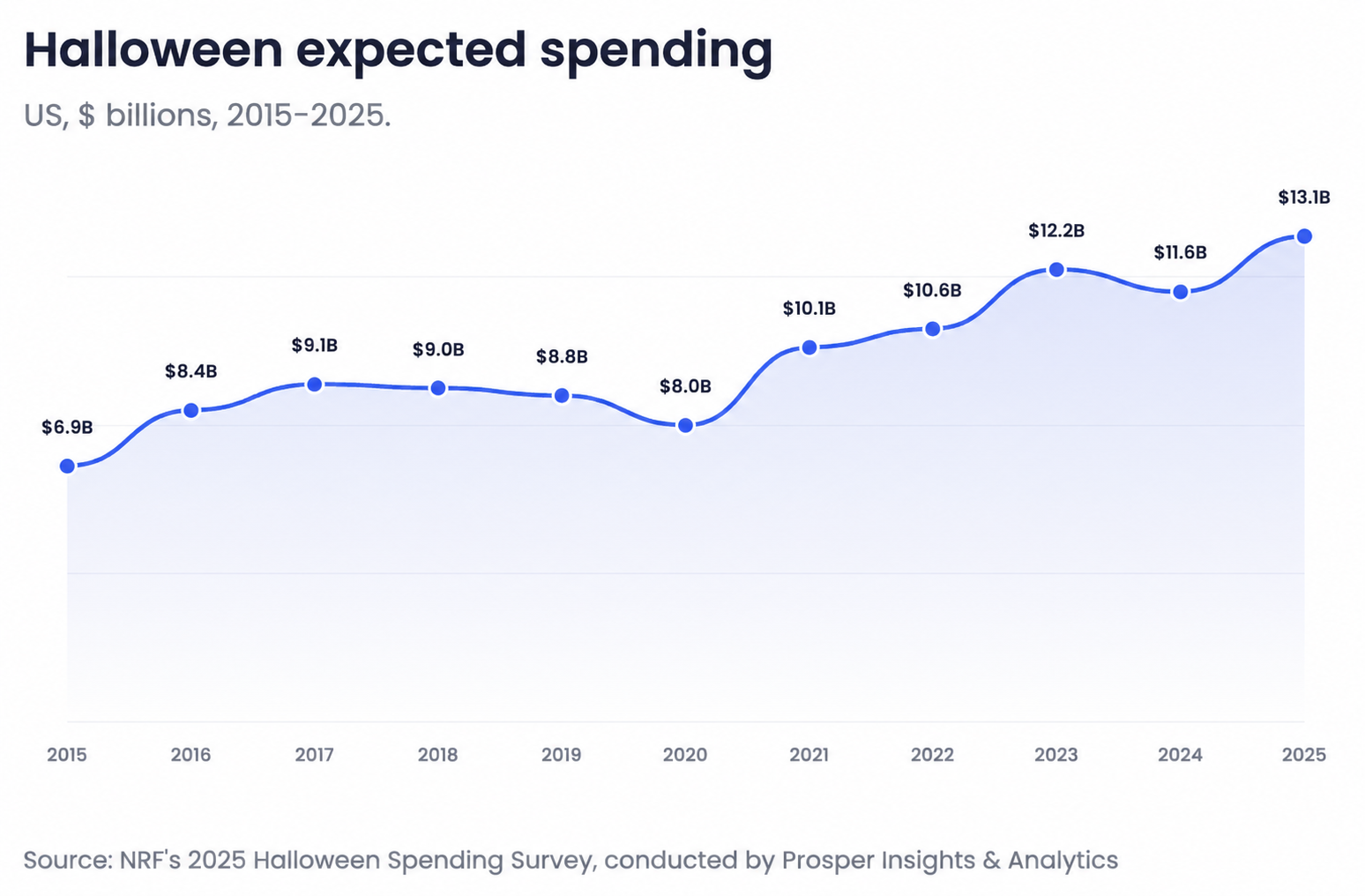
Last year, spooky season delivered more treats than tricks for marketers: Halloween spending reached a record $13.1 billion, according to the National Retail Federation's annual consumer survey. 2025 figures were up from $11.6 billion the year before, and surpassed the previous record of $12.2 billion set in 2023.
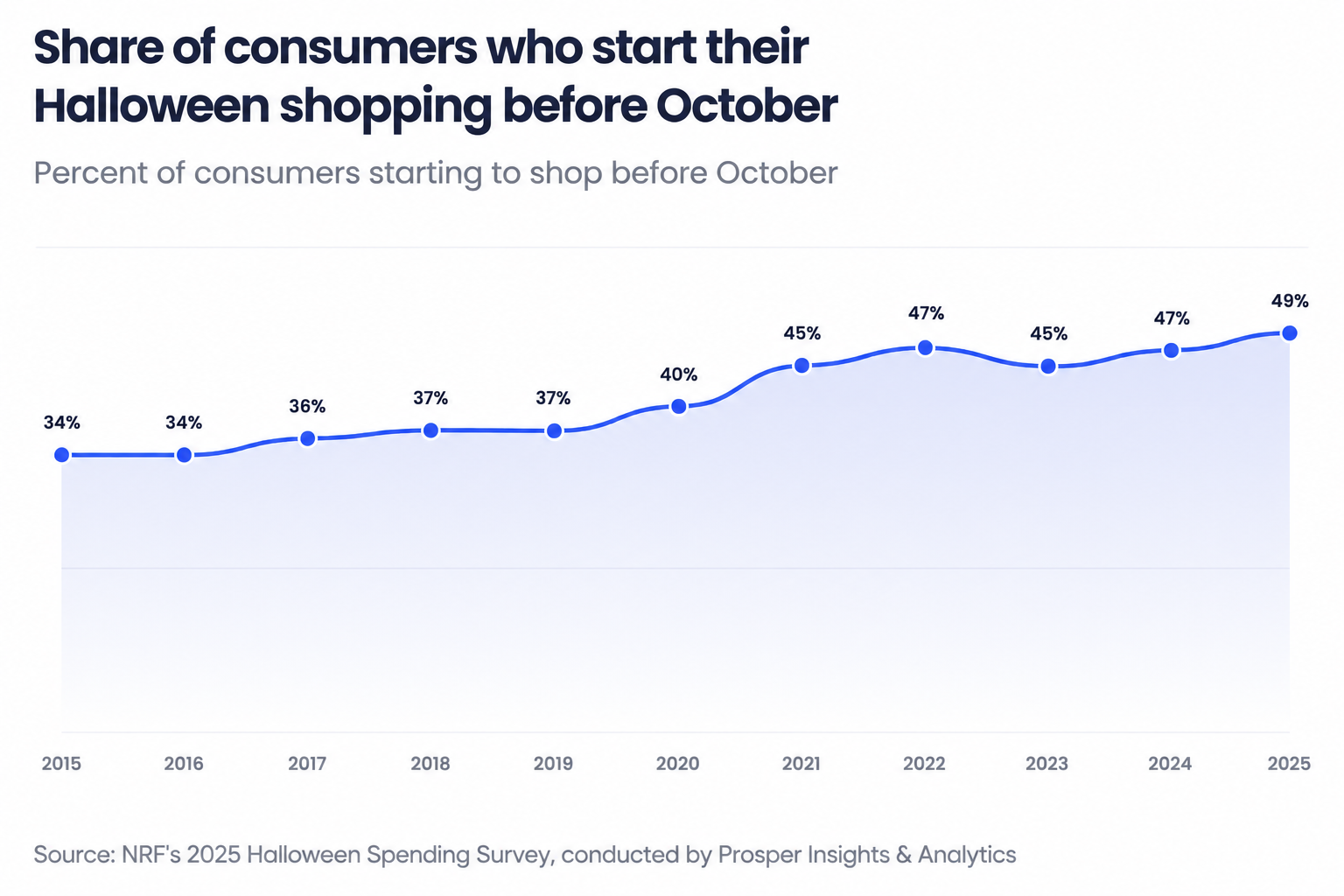
When does Halloween shopping really begin?
Research shows consumers shopping earlier every year: in 2015, just 34% of shoppers started before October. By 2025, that number had climbed to 49%. Nearly half of all Halloween shoppers were already active before the month even began. That's a full month of consumer intent most brands are still leaving on the table.
The three phases of Halloween consumer intent
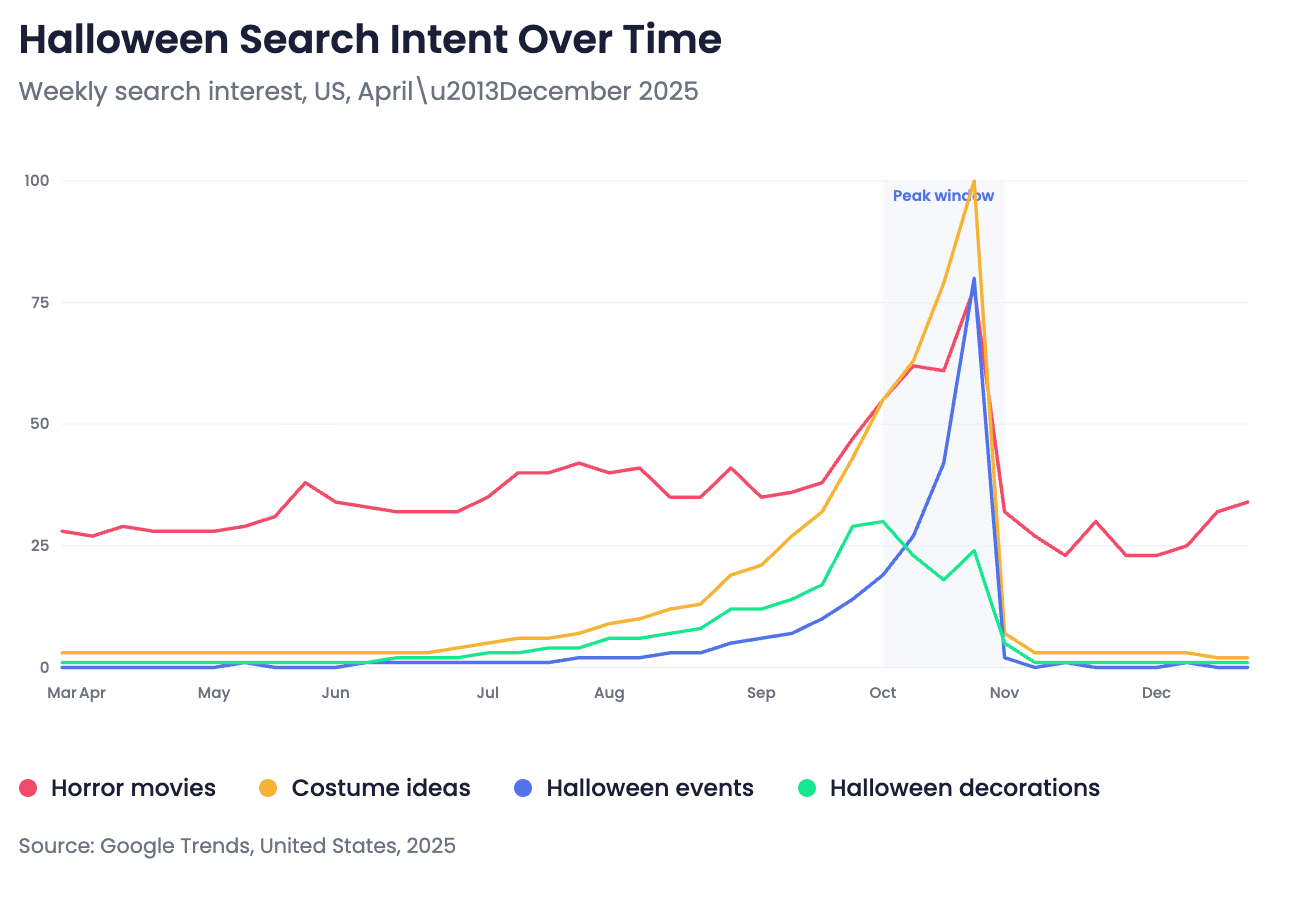
Let's take a closer look at how user intent actually moves through the season. October 31st gets most of the attention, but the weeks before and after tell a bigger story about how to actually plan around it.
Period I: The build-up
The slow climb begins in early September, when search intent starts to increase gradually. At this stage, consumers aren't purchasing yet, but they are already browsing for options. Savvy marketers don't wait for the spike; they use this period to test formats and channels before competition (and CPMs) tighten up. What to test during this phase?
💡Doubling down on UA: This is the phase to focus on new user acquisition. Intent is still soft, so now is the right time to build the audience you'll convert later and retain long after Halloween ends.
💡New or underused channels: CTV in particular benefits from early testing, since you can start proving out performance (app downloads and other downstream conversions) before the season's competition drives costs up.
💡New ad formats: This is the lowest-pressure window to level up your creative strategy, giving you time to iterate, A/B test, and optimize ahead of the big day.
By the time search interest breaks away from its slow climb, you'll already know what's worth scaling instead of finding out in real time during the busiest, most expensive weeks of the season.
Period II: The active season 🎃👻
Intent accelerates, converging toward its yearly peak in a few short weeks. This is when most conversions actually happen: consumers will be actively making their costume and decor purchases, sure, but also watching themed content on Streaming platforms, and deciding which events to attend. Whatever proved itself in Period I, this is the phase to scale it. What to prioritize during this phase:
💡Doubling down on App Retargeting: The audience you built in Period I is warm now. This is the phase to push them toward their first purchase, subscription, or booking if they haven't converted yet, and to keep driving new users in if they have.
💡Ad formats that match shopping behavior: Formats like carousels and multiproduct ads encourage conversions by giving shoppers multiple options to choose from within a single ad.
💡Tighter budget pacing: With intent compressing into a shorter window, budget needs to move with it. This is the phase to lean in while demand is at its highest.
Period III: The cooldown
Right after Halloween, search interest falls sharply, faster than most marketers expect. Your main focus should be retaining your new users, the ones who converted in Period II and can potentially become recurrent costumers— especially with Black Friday just weeks away.
It's also the right moment to look back before looking ahead: use this lower-intent window to review what actually worked across Periods I and II before applying those learnings to the next big spike.
Key takeaways for your 2026 Halloween mobile marketing strategy
Search intent for Halloween builds for weeks before October 31st, peaks in a short, high-intensity window, and drops off just as fast. For mobile marketers, that means treating Halloween as three distinct phases: use the early weeks to acquire new users and test formats and channels, lean into Retargeting once intent peaks, and focus on retention the moment the drop-off hits —all while keeping an eye on Black Friday and the rest of Q4, which follows close behind.
Want help building a full-funnel Halloween strategy tailored to your mobile business? Contact us to get started, or read our success stories to learn how ambitious brands like Burger King, Instacart, and Fetch are leveraging Jampp to drive incremental revenue.
Subscribe to our email newsletter




The programmatic platform to grow your app business


